
Baker’s Cysts Treatment and Exercises
Discovering a tight, swollen lump behind your knee can be quite alarming. Many people first notice it when trying to fully straighten their leg or when squatting down, feeling a distinct sense of restriction or fullness in the back of the knee joint. This presentation is highly characteristic of a popliteal cyst, more commonly known as a Baker’s cyst.
At Back in Motion in Winnipeg, we frequently treat patients dealing with the discomfort and limited mobility caused by these cysts. A common misconception is that the cyst itself is an isolated disease or a growth that needs to be surgically removed. In reality, a Baker’s cyst is a secondary symptom, a visible sign that something inside your knee joint is irritated and producing too much fluid.
What Is a Baker’s Cyst?
A Baker’s cyst is a fluid filled pocket that forms in the popliteal space, which is the hollow area located directly behind your knee.
Your knee joint produces a natural lubricating fluid called synovial fluid. This fluid reduces friction and allows your knee to bend and straighten smoothly. However, when the structures inside the joint become injured or inflamed, the knee goes into defense mode and produces an excessive amount of synovial fluid to try and protect itself.
As the volume of fluid builds up inside the joint capsule, the internal pressure increases. To escape this pressure, the extra fluid pushes backward through a small, one way valve in the back of the joint capsule. It fills a small sac called a bursa located between your hamstring and calf tendons, causing it to swell like a water balloon.
Differential Diagnosis: What Else Could It Be?
Because swelling behind the knee can mimic other medical conditions, a thorough clinical assessment is essential to confirm a Baker’s cyst. Physiotherapists use history and physical tests to rule out other potential causes, which include:
- Meniscal Tears or Knee Osteoarthritis: These internal structural issues are the primary drivers causing a Baker’s cyst, but they can also cause localized pain on their own.
- Popliteal Artery Aneurysm: A rare vascular condition involving a bulge in the main artery behind the knee, which typically features a distinct, rhythmic pulse.
- Deep Vein Thrombosis (DVT): A blood clot in the deep veins of the lower leg. A DVT is a medical emergency that presents with sudden swelling, severe pain, warmth, and redness localized in the calf muscle rather than just a fluid pocket behind the knee.
Anticipated Prognosis: What to Expect
The long term outlook for a Baker’s cyst is highly favorable, but it requires patience. Because the cyst is caused by internal joint irritation, its size will fluctuate depending on your daily activity levels. If you spend a long day walking on hard surfaces or lifting heavy objects, the cyst may temporarily swell and feel tighter.
A Baker’s cyst will rarely disappear overnight. However, as the underlying knee inflammation is successfully managed, the excess fluid naturally reabsorbs back into the body, the sac shrinks, and full knee mobility returns. In rare instances, a cyst can rupture, causing the fluid to drain down into the calf muscle. This can cause temporary sharpness and redness in the calf, which resolves safely with rest and elevation over a couple of weeks.
How Physiotherapy Can Help
Effective physiotherapy focuses on treating the root cause of the joint swelling rather than just the fluid pocket itself. At Back in Motion, our clinical approach is designed to decompress the knee joint and restore normal movement:
- Identifying the Underlying Issue: We assess your knee to determine what is causing the fluid overload, whether it is an irritated meniscus, early joint wear and tear, or a ligament strain.
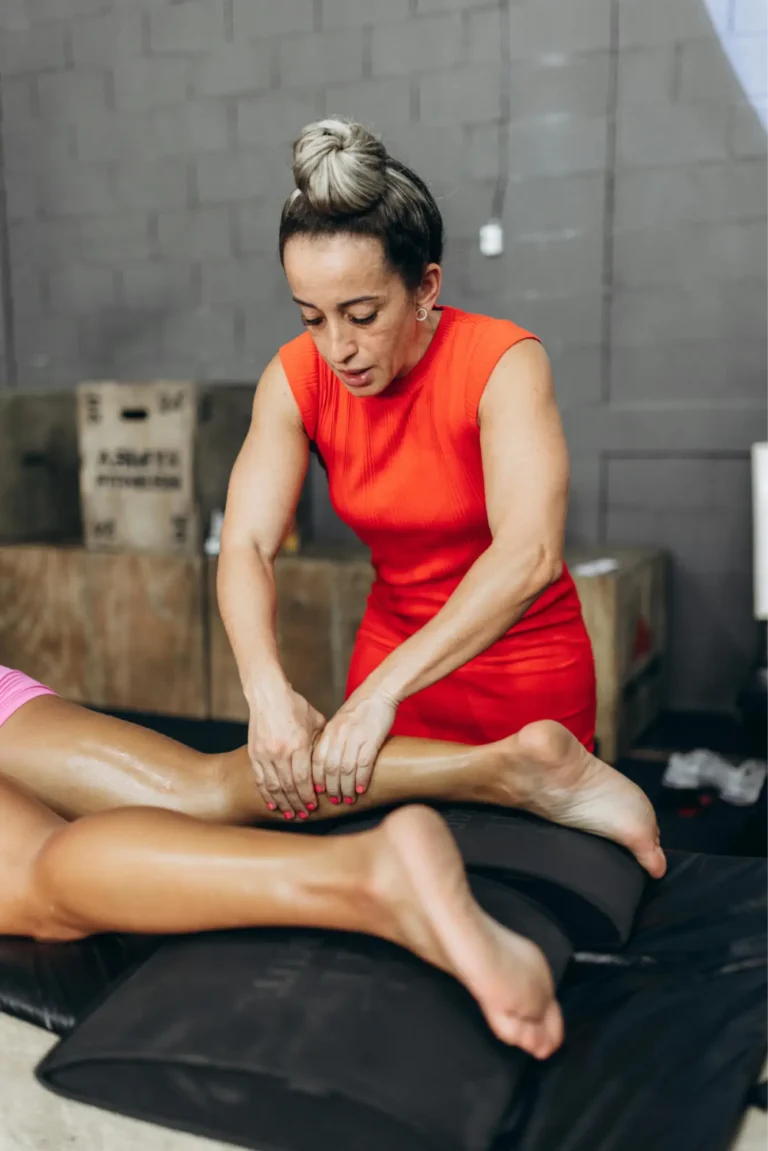
- Manual Therapy and Swelling Control: Using targeted hands on therapy, gentle joint mobilizations, and specialized compression techniques, we help move stagnant fluid out of the popliteal space to reduce local tension.
- Biomechanical Correction: If your hip stability or ankle mobility is poor, your knee is forced to absorb extra twisting stress with every step. Strengthening the muscles around the joint helps distribute physical loads more evenly, preventing future fluid flare ups.
At Home Self Management Techniques
Managing a Baker’s cyst at home involves reducing the pressure inside the joint capsule. You can implement these simple strategies safely:
- The Active Rest Protocol: Avoid activities that force your knee into deep, loaded bending such as deep squats or sitting cross legged on the floor while the cyst is acutely swollen.
- Flushing via Elevation: Lie down with your leg elevated above the level of your heart for 15 to 20 minutes a few times a day to allow gravity to assist in draining the fluid back toward your circulatory system.
- Targeted Compression: Wearing a light, flexible elastic compression sleeve around the knee can provide gentle mechanical support, helping to prevent fluid from pooling excessively behind the joint.
Targeted Rehabilitation Exercises
Movement is medicine for an irritated knee, provided it does not overload the joint. These two foundational exercises help maintain mobility and use your own muscle contractions to pump excess fluid away from the knee.
1. Seated Assisted Knee Extensions
Sit tall in a supportive chair with your feet flat on the floor. Loop a long towel or strap around the bottom of your foot on the affected side. Using your thigh muscles while gently pulling upward on the towel, slowly straighten your knee out in front of you until you feel a light, comfortable stretch behind the knee. Hold for 2 to 3 seconds, then slowly lower back down. Complete 3 sets of 10 to 12 controlled repetitions to maintain your knee extension mobility.
2. Straight Leg Raises
Lie flat on your back on a comfortable surface. Bend your uninjured knee and place that foot flat on the floor to protect your lower back. Fully straighten your injured knee, tighten your upper thigh muscles (quadriceps), and slowly lift the entire straight leg about 12 inches off the ground. Hold this position for 3 to 5 seconds, then slowly lower the leg back down with total control. Complete 3 sets of 10 repetitions to strengthen your quadriceps without adding compressing forces to the knee joint.
Reclaim Your Mobility
A Baker’s cyst is a clear message from your body that your knee joint is under stress. Trying to push through the tightness or ignoring the swelling can cause the underlying joint irritation to worsen over time, prolonging your recovery.
At Back in Motion in Winnipeg, our clinical team is dedicated to providing the objective, evidence informed care you need to clear joint inflammation. By combining advanced physical assessments with practical self management tools and personalized exercise programming, we help you resolve the root cause of your knee pain.
Contact Back in Motion today to schedule your comprehensive physical assessment, and let us help you move comfortably and with absolute confidence.