Posterior Tibial Tendon Dysfunction (PTTD): Causes & Treatment
Have you ever noticed that your foot seems to be flattening over time, or that the inside of your ankle feels achy and tired after a normal walk? Posterior Tibial Tendon Dysfunction, commonly referred to as PTTD is one of the most common causes of adult-acquired flatfoot, yet many people push through the initial soreness assuming it is just temporary strain.
At Back in Motion in Winnipeg, we see many active adults and runners who notice their arch gradually collapsing or experience pain along the inner side of their foot and lower leg. Catching this condition early is key to keeping you moving comfortably, whether you are walking along the Red River, shopping at The Forks, or staying active through a long Winnipeg winter.
What Is PTTD and What Causes It?
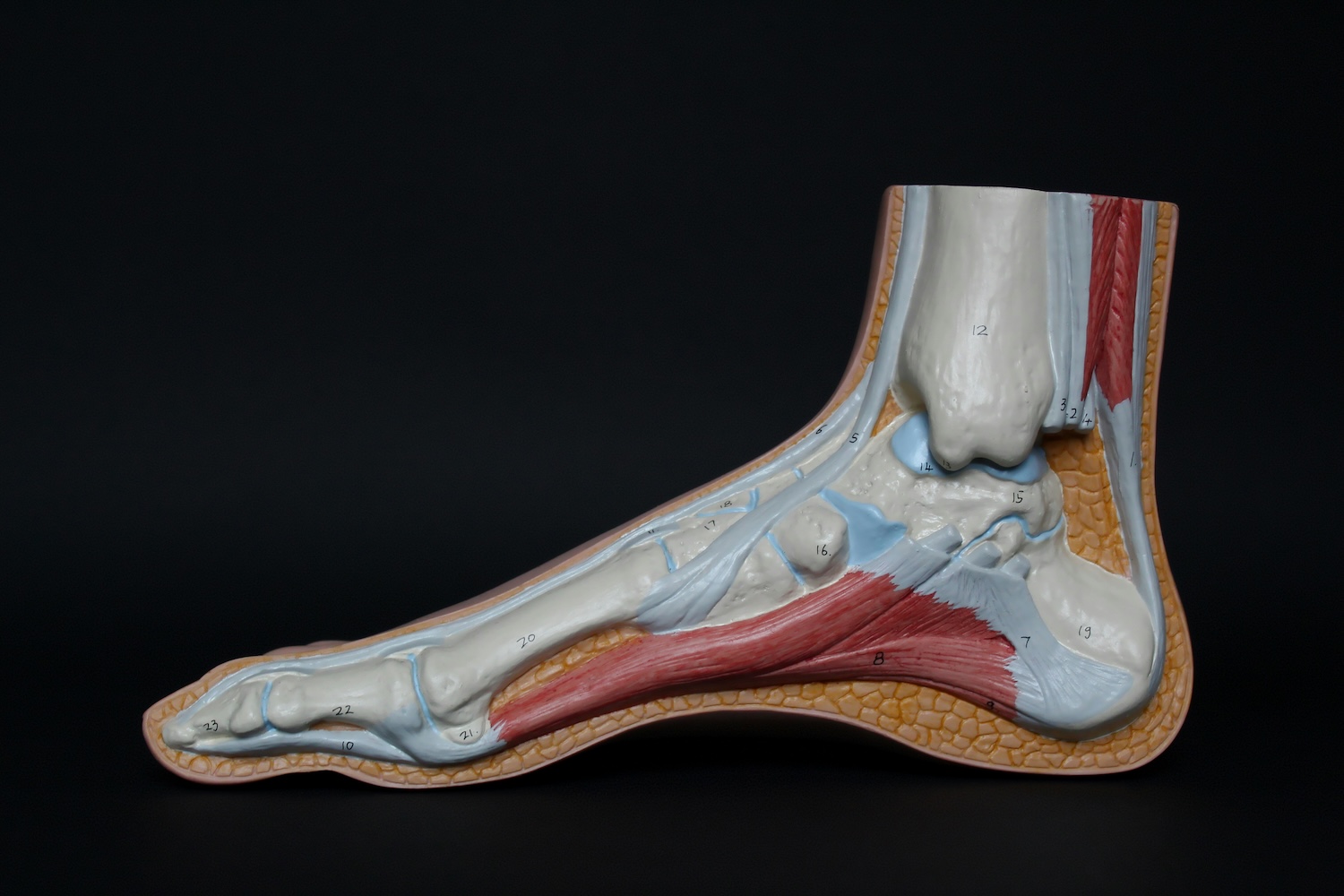
The posterior tibial tendon is one of the key supportive structures in your lower leg and foot. It originates deep in your calf muscles, runs down the inner side of your leg, passes just behind the inner bony bump of your ankle (the medial malleolus), and attaches into several bones on the bottom of your foot.
Its primary function is to serve as the main dynamic support for your foot’s arch. Every time you take a step, push off your toes, or stand upright, this tendon holds your arch up and keeps your foot stable.
When the posterior tibial tendon becomes inflamed, overstretched, or weakened, it can no longer support your foot’s structure effectively. Over time, this leads to a gradual flattening of the arch and an outward rolling of the heel, a condition often described as progressive adult-acquired flatfoot.
What Causes Posterior Tibial Tendon Dysfunction?
PTTD rarely happens overnight. In most cases, it is a chronic, progressive condition caused by wear and tear over time. Common risk factors and primary causes include:
- Repetitive Overuse: Activities that involve high-impact repetitive strain, such as running, walking long distances on hard pavement, or jumping, can create microscopic tears in the tendon faster than your body can repair them.
- Pre-Existing Flat Feet: If you naturally have low arches or flat feet, your posterior tibial tendon has to work significantly harder with every step to stabilize your foot, increasing your susceptibility to strain.
- Age and Reduced Blood Flow: Tendons naturally lose some of their elasticity and regenerative capacity as we age. Blood flow to the section of the tendon just behind the ankle bone is naturally limited, making it harder for micro-injuries to heal promptly.
- Footwear and Surface Changes: Wearing flat, unsupportive shoes or suddenly increasing your daily walking mileage on hard surfaces can overwork the tendon beyond its current endurance capacity.
Overall Prognosis: What to Expect with PTTD
Understanding PTTD recovery depends heavily on one factor: how early you catch it.
Clinically, the condition progresses through four distinct stages: starting as mild inflammation with an intact arch and advancing to a rigid, fixed flatfoot with joint arthritis.
Early Intervention (Stage 1 & Early Stage 2)
- Prognosis: Excellent
- The Good News: The tendon is still flexible, meaning the arch can be successfully supported and rebuilt without surgery.
- The Outcome: With a targeted physical therapy program, most people achieve significant pain relief, restored arch stability, and a complete return to their normal daily activities.
Delayed Treatment (Late Stage 2 through Stage 4)
- Prognosis: Guarded / Complex
- The Risk: Left unchecked, the tendon progressively degenerates or tears. The flexible foot gradually locks into a rigid structural deformity.
- The Outcome: Once arthritis sets in and the joint becomes rigid, conservative care shifts from fixing the structure to simply managing symptoms. At this point, surgical correction often becomes necessary.
The Conservative Treatment Approach at Back in Motion
At Back in Motion in Winnipeg, our physical therapy team takes a structured, multi-phase approach to managing PTTD. Our main goals are to calm tissue inflammation, protect the tendon from further weakening, restore ankle mobility, and rebuild functional strength throughout your kinetic chain.
1. Relative Rest and Unloading
In the acute phase, the most important step is removing the excessive load from the irritated tendon. This does not mean complete bed rest, but rather modifying activities that trigger pain. Reducing high-impact exercise temporarily allows the tissue irritation to subside.
2. External Support and Orthotics
To prevent the arch from collapsing further while the tendon heals, external support is often helpful. Custom orthotics, arch supports, or structured footwear help distribute weight evenly across your foot and relieve stress off the posterior tibial tendon. In more severe cases, temporary bracing or a supportive walking boot may be used to allow complete tissue rest.
3. Targeted Exercise Therapy
Strengthening the posterior tibial muscle along with the intrinsic muscles of the foot and the surrounding hip and core stability muscles is a foundational piece of recovery. Rebuilding muscle endurance allows the surrounding structures to share the workload, taking direct strain off the injured tendon.
4. Manual Therapy and Joint Mobilization
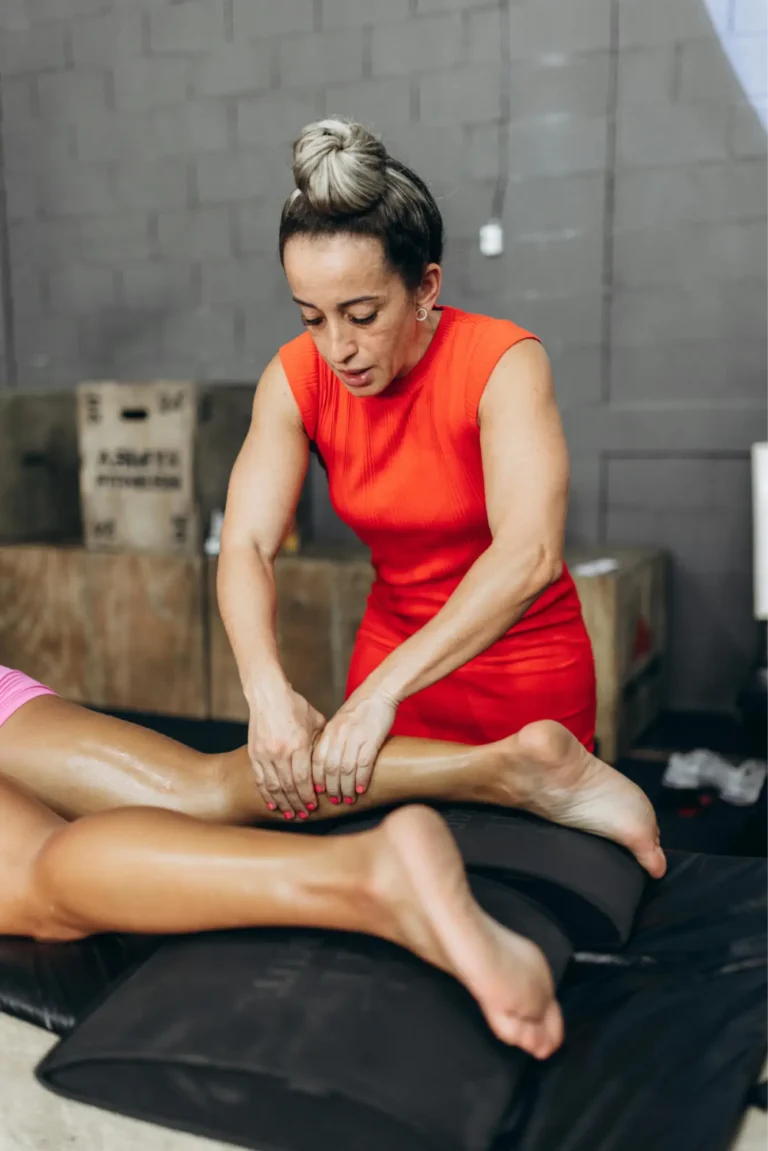
Hands-on techniques used by your physiotherapist can help restore normal joint gliding in the ankle and hindfoot, desensitize the tendon, reduce tightness in the calf muscles, and improve local circulation.
3 Exercises for PTTD
Note: Always consult with a physiotherapist before starting these exercises to ensure they match your specific stage of recovery.
Towel Scrunches
Primary Goal: Strengthen the intrinsic (deep) muscles of the foot to help support the arch from the ground up.
How to Do It: Sit comfortably in a chair with your feet flat on the floor and a small hand towel laid flat in front of you. Keeping your heel planted firmly on the ground, use your toes to curl, grasp, and pull the towel toward you, scrunching it up under your foot. Once you’ve pulled the entire length of the towel in, use your toes to push it back out into a flat position.
Target Repetitions: Perform 2 to 3 full towel scrunches (in and out) per foot.
Resisted Ankle Inversion
Primary Goal: Isolate and directly rebuild strength in the posterior tibial muscle.
How to Do It: Sit on the floor with your legs extended straight in front of you. Loop an elastic resistance band around the inside of your affected foot, anchoring the opposite end to a sturdy table leg or door frame. Slowly turn your foot inward toward your other leg against the band’s resistance. Pause for two seconds at the end of the movement, then slowly return to the starting position over three seconds.
Target Repetitions: Aim for 2 to 3 sets of 10 to 12 controlled repetitions.
Single-Leg Heel Raise with Arch Squeeze
Primary Goal: Build calf endurance and improve dynamic arch control under weight-bearing conditions.
How to Do It: Stand upright facing a wall or kitchen countertop for light balance support. Place a small foam ball or rolled-up hand towel between your heels. Keeping gentle, continuous pressure on the ball to keep your heels from flaring outward, slowly lift your heels off the ground and push up onto your tiptoes. Hold the top position briefly, then lower your heels back down slowly and under control. *If this exercise is too difficult for you, start with double-leg heel raises and progress accordingly.
Target Repetitions: Aim for 2 to 3 sets of 8 to 10 smooth repetitions.
Reclaim Your Arch Stability in Winnipeg
You do not have to live with progressive foot pain or watch your arches collapse over time. With early recognition, proper external support, and a targeted rehabilitation program, you can protect your feet and continue walking, running, and exploring Winnipeg without pain.
Our experienced clinical team at Back in Motion in Winnipeg is dedicated to helping you restore healthy foot biomechanics and preserve your long-term mobility. Contact Back in Motion today to schedule your comprehensive foot and ankle assessment and take the first step toward lifting your arches.