Snow Shovelling Safety Tips to Protect Your Back
Avoiding Snow Shovelling Back Pain This Winter
You wake up to a fresh 20 centimetres on the driveway, and you’ve got 15 minutes before you need to leave for work. So you grab the shovel, start heaving, and by the time you’re done, your lower back is complaining. By the next morning, it’s stiff and sore.
Snow shovelling back pain is one of the most common winter complaints we hear in Winnipeg. The good news is that a few simple changes can make a big difference. Here’s how to warm up, move snow safely, pace yourself and know when it’s time to get help.
Why Shovelling Is So Hard on Your Back
Shovelling is a real workout, not just a chore. You’re bending, lifting, twisting and throwing, often in the cold, often in a rush and often first thing in the morning when your body is still stiff.
The problem usually isn’t one “wrong” movement. It’s the combination: heavy, wet snow, lots of repetitions and very little rest. Do that after weeks of mostly sitting, and your back is being asked to handle much more than it’s used to.
Don’t forget your heart
Shovelling also puts real strain on your heart, and cold air can raise your blood pressure. If you have heart disease, high blood pressure or are less active, talk to your doctor before tackling heavy snow, and consider asking for help or using a snow blower.
Warm-Up Moves Before You Head Out
You wouldn’t play a hockey game without warming up, and shovelling deserves the same respect. The Canadian Chiropractic Association suggests about 10 minutes of warm-up, like a brisk walk around the block.
If you’re short on time, try a few of these indoors before you put your boots on:
- marching on the spot or climbing the stairs a few times
- arm circles, forward and backward
- gentle trunk rotations, turning your shoulders side to side
- hip hinges, bending forward at the hips with soft knees, then standing tall
- a few slow squats to wake up your legs
The goal isn’t a workout. It’s just getting your heart rate up a little and your joints moving before you ask them to work hard.
How to Shovel Snow Safely
Push whenever you can
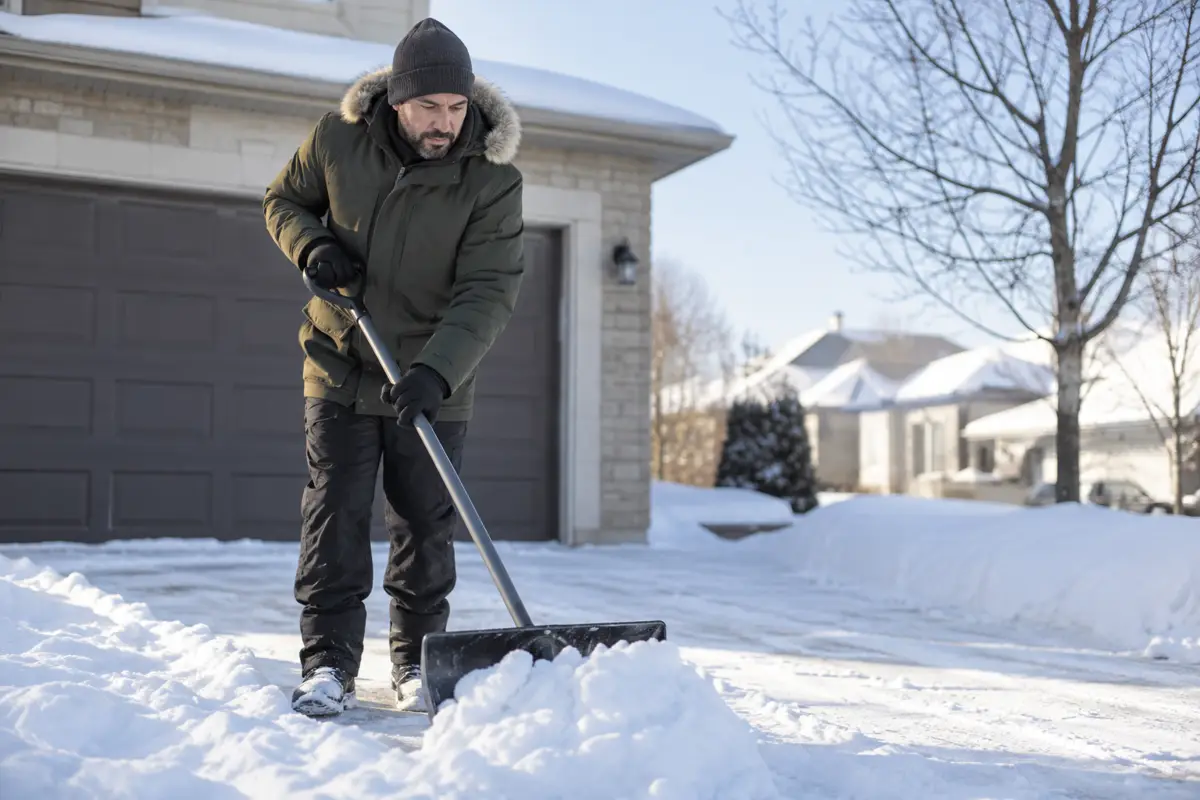
The easiest lift is the one you don’t do. Push snow to the side instead of lifting and throwing it whenever possible. A lightweight push shovel makes this much easier.
When you do need to lift
There’s no single perfect lifting technique, and a bit of bending in your back isn’t dangerous. What adds up is heavy, fast, twisting lifts, especially when you’re tired. These habits help:
- Take smaller scoops, especially with wet, heavy snow.
- Keep the shovel close to your body rather than reaching far out.
- Use your legs and hips, bending at the knees as well as the waist.
- Turn your feet to face where the snow is going, instead of twisting and throwing over your shoulder.
- Switch which side you shovel on every so often.
Gear that helps
A shovel with a curved or adjustable handle can reduce how far you bend. Coating the blade with a non-stick spray stops snow from clinging and adding weight. Boots with good grip lower your risk of slipping, which is another common cause of winter back injuries.
How to Pace Yourself
Winnipeg snowfalls don’t wait for a convenient time, but your back will thank you for not tackling the whole driveway in one frantic burst. These habits help:
- Shovel in stages during a big snowfall, so you move lighter snow more often instead of one heavy pile at the end.
- Take short breaks often, especially when you start to feel tired, to stand tall, walk around and shake out your arms and legs.
- Drink water before, during and after, since it’s easy to forget in the cold.
- Dress in layers so you can take one off as you warm up.
- Give yourself extra time in the morning, so you’re not rushing.
When you’re done, finish with a short walk and some gentle stretching for your back, hips and shoulders.
Warning Signs It’s Time to See Someone
Stop shovelling and call 911 if you have:
- chest pain, pressure or tightness
- pain spreading to your arm, neck, jaw or back
- shortness of breath, cold sweats, nausea or light-headedness
These can be signs of a heart attack. Don’t wait to see if they pass.
Get urgent medical care if you have back pain with:
- numbness in your groin or inner thighs
- new trouble controlling your bladder or bowels
- weakness or numbness in your legs that’s getting worse
Book an assessment if:
- your back pain hasn’t improved after a few days
- pain travels down your leg
- you keep hurting your back every time you shovel
- the pain is stopping you from sleeping, working or getting around
How We Help With a Shovelling Injury in Winnipeg
Most shovelling strains settle within a few days to a couple of weeks, especially if you keep moving gently. If yours is lingering, or you want help getting back to normal and avoiding a repeat, the team at Back in Motion can help in a few ways.
Chiropractic care
Your chiropractor can assess your back and use hands-on treatment, like spinal manipulation or mobilization, to ease pain and stiffness so moving feels easier.
Physiotherapy
Your physiotherapist can help you get moving again with a plan that builds strength in your back, hips and legs. They’ll also help you practise lifting and shovelling movements so your back is ready for the next storm.
Massage therapy
Massage can help ease muscle tension and soreness after a strain, and many people find it helps them relax and move more comfortably.
These services work well together. Hands-on care can ease pain in the short term, while exercise builds the strength and confidence to keep you shovelling all winter.
The Bottom Line on Snow Shovelling Back Pain
- Warm up for a few minutes before you head out.
- Push snow when you can, and take smaller scoops when you have to lift.
- Face where the snow is going instead of twisting and throwing.
- Shovel in stages and take regular breaks.
- Know the warning signs, especially chest pain or numbness, and act on them.
If shovelling has left your back sore, you don’t have to tough it out until spring. Book a visit with our Winnipeg team for chiropractic care, physiotherapy or massage, and we’ll help you feel better and get ready for the next snowfall.
References
Canadian Chiropractic Association. (2022). Shovel light: Tips for shoveling snow during the winter. https://chiropractic.ca/shovel-light-tips-for-shoveling-snow-during-the-winter